Common perceptions:
There are a lot of ads and claims that honeybees are endangered. The simple answer is ‘yes and no’.
Why yes? because there are new pests pressuring and challenging their survival. In the 1980’s, many colonies began to collapse for no apparent reason, dying seemingly suddenly. Entomologists (scientists that study insects) found pests were parasitizing our bees. Tracheal mites, and then Varroa Destructor mite were found to be the culprits. And now there is a new one found that threatens to make their way around the world: Tropilaelaps mite. The challenge is to kill an insect that lives on an insect. Seems tricky.
What does that mean to the beekeeper? We have to decide how to minimize the mites infestation, through brood breaks, treatments, or natural selection. In my apiary, I utilize brood breaks and also use organic acid treatments. These acids are already found naturally in foods like rhubarb.
What happens if mites are uncontrolled? Varroa Destructor mites, our current villain with a very appropriate name, will eat the fat body (compare to our liver) which is required for bees to live 4-6 months through Winter. This results in a whole colony collapsing mid-Winter unseen by the beekeeper. In Spring, the boxes will be full of dead bees, and vulnerable to wax moth damage.
Another result of uncontrolled mites is similar to what ticks can do. They vector diseases. Some are simple and can be overcome by re-queening a colony. But some are very destructive and sad, like paralytic disease (bees cannot move around properly, fly or tend hive duties.) Deformed Wing virus is a death sentence to a bee because they will never fly, and if enough of them have the disease, they cannot forage for food so the colony will starve out.
A responsible beekeeper should do everything possible to keep their bees healthy, without compromising the health of people that eat their honey. Golden Egg follows State and Federal guidelines, using approved treatments, and holding to the principal that ‘the label is the law’. Mite treatments spell out on the label how and when to apply them, and must be followed. New York State, USDA, and EPA provide approvals for these materials, instructions and doses. To be extra careful, Golden Egg uses organic acids when the honey supers are removed and don’t expose our honey to the treatment, even if authorities allow it as shown on labels.
What about honeybees in the wild? There are very few feral colonies that survive year to year in the wild. Some are found to be ‘self-grooming’, and can keep the number of mites lower. But once that queen is replaced by the bees, a new queen genetics might not produce the same hygienic behavior. Her offspring will carry her genetics, and those of about 15 drones that she mated with initially. Without beekeeper intervention, those next-generation, non-hygienic colonies are susceptible and can’t overcome mites. This is why many people conclude that honeybees are endangered; the lack of consistent survival in the wild.
Why can honeybees be considered ‘not endangered’, then?
There are a multitude of beekeepers all around the world, striving to care for, and increase their apiaries. They monitor mites, and do what they can to be educated regarding good beekeeping practices. We treat our bees like the livestock that they are. Good beekeepers inspect their colonies, looking for problems before they are big problems, and we take steps to minimize them. There are so many beekeepers around the world, that hopefully there will always be new colonies propagated.
How can you help honeybees?
Don’t keep bees on a whim. If you want to be a beekeeper, educate yourself, and then educate yourself more. “Bee havers” who think they can set up boxes of bees and just leave them alone could actually harm their own bees and nearby apiaries by allowing diseases to begin and then to run rampant.
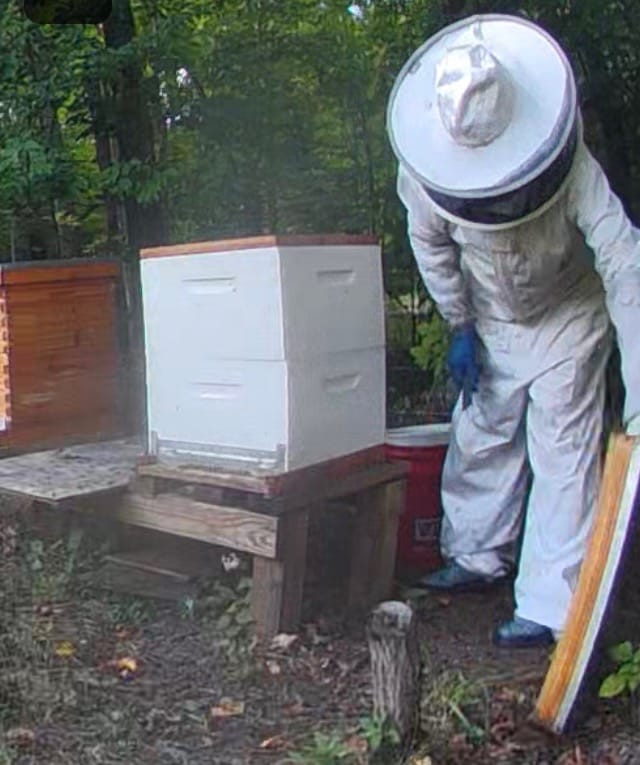
Join a local bee club, go to special classes, find a mentor. Decide if you have the time and desire to keep them, and the dedication to treat them like valued livestock, (and the ability to lift). Realize that the initial investment to be a beekeeper is significant, both in the actual boxes, frames and other common items like extractors, but also in your personal protective gear. And if you still want obtain bees, be ready for anything. Bees don’t read the books or go to the meetings, and seems they make up complications just when we think we’ve learned it all. LOL
To be a beekeeper in NY, you must register your bees. Many (if not most) other states, beekeepers must register their apiaries. If a beekeeper wishes to sell bees or move their bees for pollination, they also must have the state inspector come to verify and certify the bees are disease-free,. This is not a ‘big brother’ infringement. It is to keep our bees healthy. If a colony develops a bacterial virus known as American Foul Brood, it can spread and kill colonies. If found in someone’s apiary, the state inspector can notify the beekeepers in the vicinity that an apiary in the area has been tested positive for AFB. The spores last more than 80 years and so the bees and equipment must be burned. Don’t put your bees or those of your neighbors at risk. Register, get inspections. You will be glad for the help and instruction available.
The very best way that you can help the survival and health of honeybees is to get to know your local beekeepers, be sure of their choices in beekeeping, and then buy your honey local in order to support them and their efforts. Your food depends on those bees and maybe even your health.