Honey
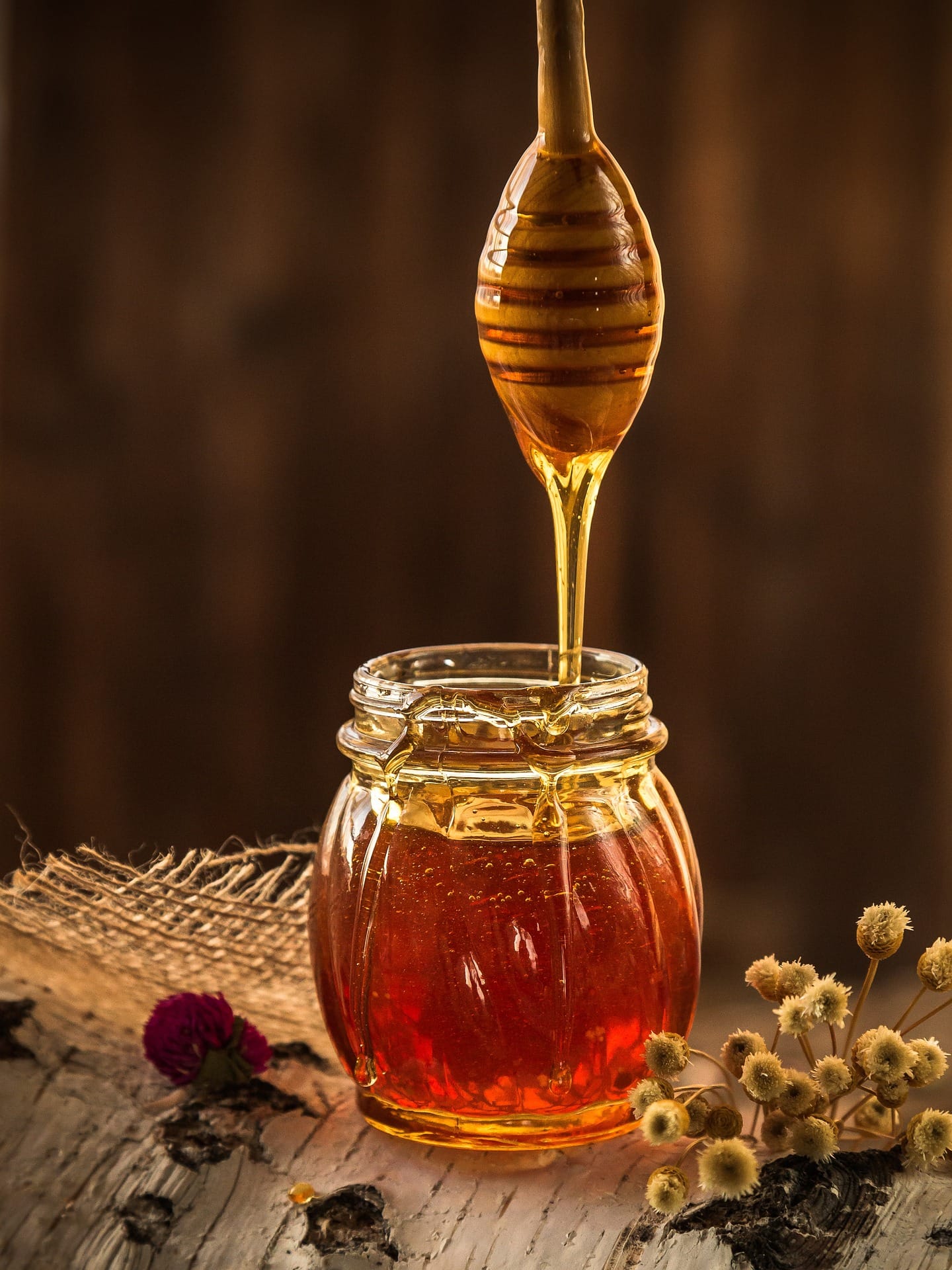
It’s not just a sweetener. Many people find benefits from the pollen bits in unfiltered honey. But there is so much more. Did you know that honey is a centuries-old ointment for burns or cuts? It has antibacterial properties that help your skin heal.
Pollen
Pollen is very high in proteins, amino acids. This is necessary for the bees to raise brood. They make honey for energy, but need protein during their brood-rearing seasons. The bees will carry the pollen stuck to the hairs on their legs, known as ‘bees knees’, and ‘pollen baskets’. They deposit it along with a bit of nectar, packing it into a cell near the brood area to ferment slightly. This is called bee bread.
Some beekeepers will attach a pollen trap to the entrance of their hives, for a day or two at a time, to harvest the pollen to sell for human consumption. This pollen, if produced local to you, may help desensitize you to allergies. This is a very good argument for buying your honey and pollen from a local beekeeper.
Wax
Wax is one of the most interesting products from the hive, in my opinion. Bees eat non-waxy food, and then can secrete wax flakes from their abdominal plates. Production is increased during the nectar flow, to build new comb and to cap the resources and larva.
Wax is used by beekeepers and others to wax foundations, to make candles, and to make personal products like soaps, lip balms, and salves.
Propolis
Bees create a glue from their saliva, wax, and saps from trees, like evergreens. They use this glue to close in small gaps, cracks, or openings in their hive that they don’t like. They use it to glue together the hive boxes. The beekeeper needs a special hive tool to pry apart the boxes. Bees are great at producing this glue.
Propolis also helps the bees keep the inside of the hive bacteria-free, is anti-fungal, and anti-microbial. It is used by people in tincture form, a throat spray, taken orally, and topically. Propolis has high level of flavonoids which are anti-oxidants known to have health benefits to humans.
Royal Jelly
Another amazing product of the hive. (Who am I kidding? I am so amazed by everything the bees can make.) This royal jelly is produced by a small gland in the young nurse-bee’s forehead. They excrete it into a cell when the egg hatches. The larva feeds on this royal jelly for 3 days. A queen cell receives an abundance of this in her cell, and then is fed this her whole life.
Is Royal Jelly helpful for human health? Some people think so, though the FDA says no. From looking at the substance makeup, it appears it won’t hurt, but I, personally, wouldn’t claim it helps.
Benefits our Agriculture
I would be remiss if I failed to mention a secondary benefit of having a beehive nearby. If you grow food, fruit trees, a garden, your production will be at full capacity. Bees are responsible for a large portion of pollination, ensuring our varied diet.
One warning: If you have older fruit trees that you neglected to prune, and then you get bees, your trees might crack or break from the weight of the full fruit production. You might do well to prune before getting bees, and then prune excess fruit. Ask me how I know. lol
In Summary:
Bees are amazing creatures, totally dedicated to their colony, with skills to communicate, make decisions, and produce many things that are beneficial to people. They are workaholics that seem to never tire or waste the day. We would do well to copy their dedication and their need to be productive.